Thursday, February 17, 2011

Goats Cheese Puff


Every now and then one needs something truly rich and celebratory for no particular reason at all. And sometimes one needs this midweek; that is, without planning or shopping or meticulous preparation.

The following recipe is fast becoming one of our more luxurious staples. Decadent souls that we are, we always have goats cheese and parmesan in the fridge; they sit there for weeks until needed. Our chickens provide us with an abundance of eggs, and thyme, of course, grows in the garden. With ingredients to hand, the dish takes ten minutes to prepare and another ten to cook. Thus while my little wild things watch a Maurice Sendak animation, I can assemble and cook a sublime golden puff, whip up a salad – perhaps zucchini –, set out good bread, pour out the wine and dinner, my friends, is served.

Last night Grandpa joined us. After finishing the last morsel, he sighed, then waggled his finger at my very little children. 'When you move out,' he said, 'life will be expensive. This sort of meal costs a fortune in a restaurant, so you'd better start saving!'. My children looked at him blankly; they know, you see, how easy it is – my seven year old makes this under supervision, and we are all very proud of her.

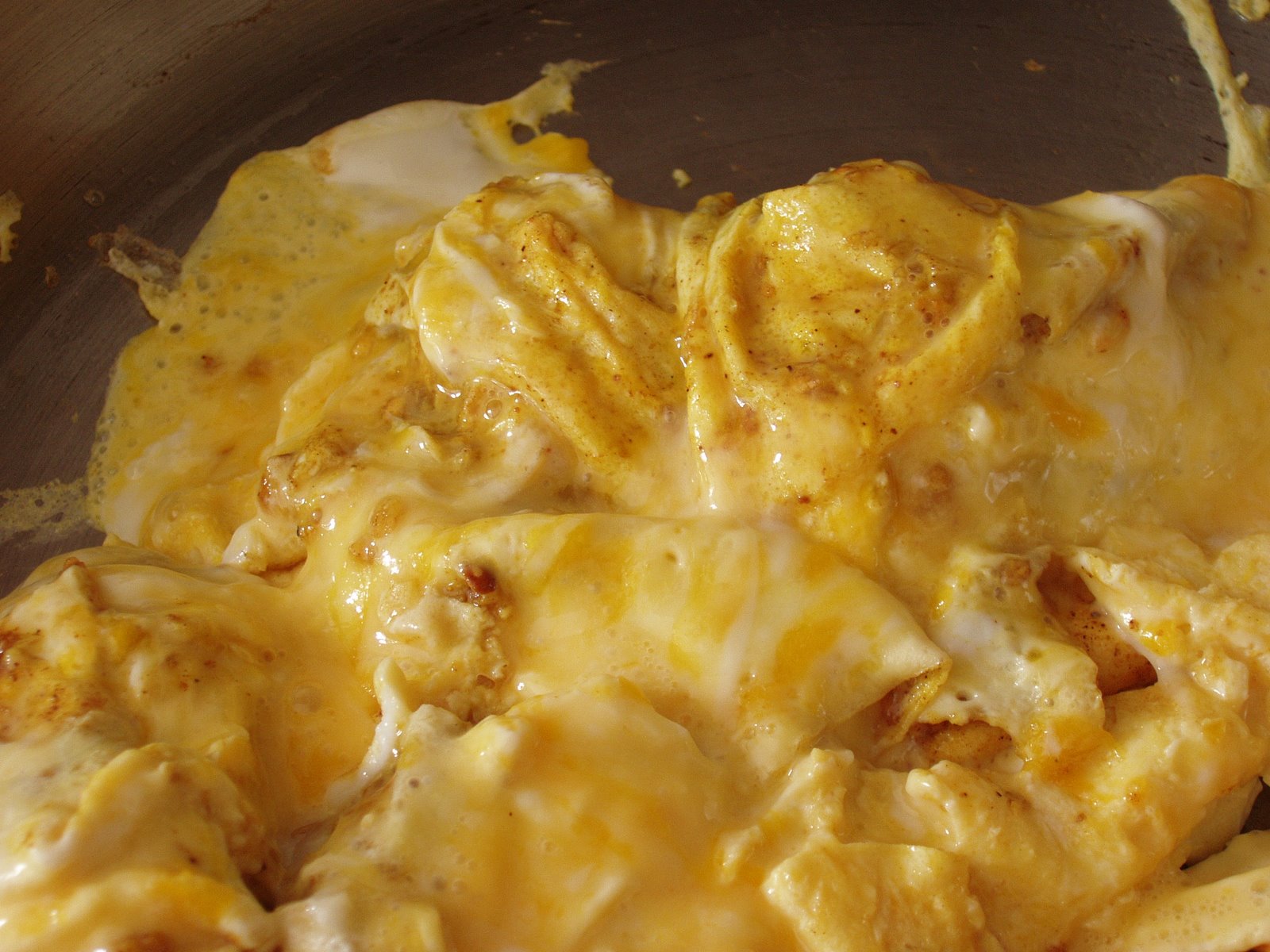
The photograph shows the puff partially deflated. If you're not photographing your food before dinner (and I rather hope you are not), insist everyone sits up at the table just before it is ready so you can whisk it out of the oven and present it, in all its golden glory, before it sinks.

The foodies among us will recognise it as a simple flourless soufflé, but since so many people are scared of soufflés we will call it puff.

Goats Cheese Puff

- unsalted butter
- 3 eggs, at room temperature
- 150g soft goats cheese (I use Meredith Dairy chévre)
- 60g grated parmesan
- 1 tbs milk
- 5 or so stems thyme, leaves picked and chopped to make a scant tablespoon

Preheat the oven to 200°C. Grease a large ovenproof soup bowl with the butter.

Separate the eggs, placing the whites into a large stainless steel bowl*, and the yolks into another largish bowl. Lightly break up the yolks with a fork, then mash the goats cheese into the yolks. Add the milk, the thyme and two thirds of the parmesan to the cheesy yolks, and mix well.

Whisk the egg whites until they form soft peaks, then fold them into the mixture. Scrape into the soup bowl, and sprinkle with the remaining parmesan. Slip into the oven for twelve or so minutes. It is cooked when the centre is goldenly puffed and the insides are creamy, not liquid. You can check by opening the puff with a metal spoon. If you can see liquid, slip it back into the oven for a few more minutes.

Serve immediately. Enough for three or four – it's very rich.

Adapted from a recipe in the delightful Kitchen Diaries by Nigel Slater.

*Plastic bowls are porous and always contain traces of fat; egg whites will not whisk if they come into contact with fat, so plastic bowls are no good. Aluminium bowls turn the whites grey, and copper bowls are wildly expensive. Thus, egg whites must be whisked in stainless steel bowls. Having said that, although whites will slide down the side of a glass bowl, if you don't have a stainless steel or copper bowl, glass will do.

(Local: eggs, goats cheese, thyme, milk. Not local: butter, parmesan.)

Thursday, February 10, 2011

Zucchini Salad


When I think finger food, I think kiddie food: corn on the cob, cherry tomatoes, carrot sticks. But lately I have noticed that my adult friends seem to love getting their hands dirty, too. When it's asparagus season, no one can help but snaffle a spear and whiffle it up*; and now it's time for zucchini. I serve a simple zucchini salad night after night, and it seems few can resist picking up ribbons of zucchini and, heads tilted back, delicate necks exposed, coiling them into their mouths. It's like eating grapes on a Roman couch, only there's no nubile young slave at the ready, more's the pity.

The picking up, the coiling, the draping, the swallowing, the licking of the lips, the sucking of the fingers – the eroticism of zucchini is surprising. Alas, not only do we lack slaves, but young children are present and we can go no further.

The recipe which follows is ridiculously simple – so simple I'm embarrassed to write it down – but there are two tricks. The first is to use really young, firm zucchini, when the flavour is mild and the seeds immature. The other is to slice the zucchini very thinly. I use a vegetable peeler and, by running it down the length of the zucchini, get long pretty ribbons tumbled over the plate.

When the zucchini are this fresh and sliced so thin, they need nothing more than the most basic dressing: lemon juice, olive oil and a pinch of salt. Even so, for a change I sometimes add slivers of parmesan, also shaved with a veggie peeler; or basil leaves, torn over the salad just before serving. From a mother's point of view, the parmesan is particularly effective: even zucchini hating youngsters will sometimes eat a ribbon when they can wrap it around a hefty shard of cheese.

*Incidentally, the correct way to eat asparagus is, in fact, with one's fingers.

Zucchini Salad

- small firm zucchini
- olive oil
- lemon juice
- basil leaves (optional)
- parmesan (optional)
- salt

Hold the zucchini over a large plate. Using a vegetable peeler, peel it into ribbons which tumble onto the plate.

Drizzle with olive oil and a good squeeze of lemon juice. Season to taste. If you wish, sprinkle with torn basil leaves or slivers of parmesan.

Serve immediately.

(Local: zucchini, lemon, olive oil, basil. Not local: salt, parmesan.)

Tuesday, February 1, 2011

Chocolate Zucchini Loaf


In principle, I hate masking vegetables. I think they are beautiful, delicious and healthy, so I present them in simple forms over and over and over again, and expect my kids to eat them until they like them.

In practice, some veggies defeat me. Take zucchini. We have a zucchini glut, but no matter how delicately it is prepared, I cannot get my two younger children, in particular my four year old, to eat it. Against my principles, I have begun shredding zucchini and hiding it in the base of pasta sauce, and have discovered this has its rewards. The philistines gobble it up, and my seven year old, who is in on the secret, sniggers and rolls her eyes at me through each such meal; such bonding is special, in its own way.

Yet my four year old loves to cook. She loves chocolate, and she loves cake, and I began wondering what would happen if we made a chocolate zucchini cake. On the weekend, we needed an activity, so we gave it a go.

Together, we measured ingredients. Together, we grated zucchini and together, we mixed it in. To my astonishment, despite the highly visible bright green shreds of zucchini she not only tried the cake but loved it. Further, having discovered zucchini is not such a big deal, she later ate some in a couscous salad with only a very little fuss.

Yet again I have learned that my principles are bunk. A little masking, a little fun with a vegetable, and life is so much easier – even at arsenic hour, aka dinnertime.

Chocolate Zucchini Loaf

- 125g fair trade* 70% cocoa** chocolate
- 3 eggs
- 2 cups white sugar
- 1 cup vegetable oil
- 2 cups grated zucchini (about 2 medium, or 1 large, or ½ a gigantic one...)
- 1 tsp vanilla essence
- 2 cups plain flour
- 1 tsp baking soda
- 1 tsp ground cinnamon
- ¼ tsp ground cloves

Preheat the oven to 175°C. Grease two 10cm x 23cm (9x5in) loaf pans and line with baking paper.

Break up about 30g chocolate and place it into a shallow cup. Zap it in the microwave, removing regularly to stir, until it's just melted. Place the rest of the chocolate into a food processor, and pulse-chop it into small chunks. (Alternatively, you can chop it with a good heavy knife; or, of course, you can just use chocolate chips, but it's hard to find fair trade chocolate chips and the history of chocolate is a history of exploitation, so this is why I do what I do.)

Break the eggs into a large bowl, and whisk. Add the chocolate, sugar, oil, zucchini and vanilla essence, and mix well.

In a separate bowl, sift together the flour, the baking soda and the spices. Whisk to combine. Stir in the chopped chocolate, then turn the contents of this bowl into the other. Quickly and gently fold everything together, then pour and scrape the batter into the tins.

Bake for an hour, or until a toothpick comes out clean. Leave to cool in the tin for twenty minutes, then turn out onto a wire rack. Serve warm or cold. This loaf keeps well; it is still very moist the next day.

The recipe is all over the internet; I tweaked one of the many versions found at allrecipes.com.

* Because, you know, those people work really hard and their children should get to go to school.

** If you have a sweet tooth, use chocolate with a lower cocoa ratio.

(Local: eggs, zucchini. Not local: everything else.)

Monday, January 24, 2011

Tumbled Eggs with Zucchini Flowers


There is an old joke in New Hampshire that the only time anyone locks a car door is in summer, lest they return to find their back seat loaded up with squash. It's easy to plant too much – five zucchinis for a family are more than enough - and yet they are so easy to grow, and so delicious fresh, that it's hard not to.

We're well into zucchini season, and our plants are running riot. After the initial glorious burst, during which we ate zucchini salad every day for two weeks, it was time to turn my attention to the flowers. Golden zucchini flowers are velvety in texture and taste faintly of, you guessed it, zucchini.

I love the flowers. Stuffed with mozzarella and grilled, or lightly battered and fried, they are absolutely delicious, if a little fiddly to prepare; but in the middle of the week, when I'm looking for something easy to cook, I mix them with eggs. Eggs and zucchini flowers go beautifully together.

Pick male flowers, which are on little stems; or female flowers attached to visibly swollen zucchini. Leave the other female flowers, and at least one male flower to fertilise them, so that the zucchini glut continues. Later in the summer, when the pumpkins are really romping, use pumpkin flowers, instead.

If you don't grow your own zucchini, look for the flowers at the markets. Meanwhile, make a note in your diary to find a sunny corner or a large tub, and fill it with zucchini next summer.

Tumbled Eggs with Zucchini Flowers

- 8 to 10 zucchini (or pumpkin) flowers
- 6 or so basil leaves
- a good knob of butter
- 6 eggs
- a small handful of grated cheddar
- 2 tbs water
- salt, pepper

Slice off the hard base of the zucchini flowers and remove the sepals. Shake out any ants. Gently tear the petals from base to stem into strips about ½cm wide, or wherever the tear lines feel natural. Tear the basil into small pieces.

Crack the eggs into a bowl, and whisk with 2 tbs water. Add the grated cheese, and set aside.

Gently warm the butter in a wide skillet. When it has melted, add the flowers and the basil, and sauté for several minutes or until soft. Tip the contents of the pan into the eggs, and stir gently.

Raise the pan to medium heat, and add a little more butter if necessary. Tip the eggs into the pan, and draw the flowers around to distribute them evenly. Leave for a minute or so. Then, using a spatula, scrape the eggs from the edge to the middle of the pan, drawing them up into soft mounds. Do this several times, until the eggs are barely set. The eggs will continue to cook after you have removed them from the heat, so don't let them dry out.

Serve with salt and freshly ground pepper, tumbled over grilled bread.

Adapted from a recipe by Deborah Madison in The Savory Way.

(Local: zucchini flowers, basil, eggs. Not local: butter, salt, pepper.)

Wednesday, January 19, 2011

Bottled Plums, Two Ways


Each peach pear plum, I've got a red thumb. Actually, it's my whole hand. Actually, it's both my hands, to be precise. You see, a friend has a tree full of blood plums. Her kids hate them, so she gives them to us. On Sunday, we received an enormous tubful, and I've been busy all week. I've made bottled plums and poached plums, plum jam and plum sponge, and this afternoon I'm borrowing a dehydrator to see how that goes.

What's not to love about preserves? I peek into my great-grandfather's cupboard, purpose-built for preserves, and see row upon row of glowing fruit. Here is sunshine in a bottle. Here, too, is my link to all the women who went before me, stewing, bottling, and putting up food against lean times. I love being part of that history, and love the sense of abundance that is the result of frugality and hard work. I see so many fruit trees going to waste; we let the birds eat them, or the fruit fall to the ground. Preserves tackle this excess of seasonal fruit, and offer something to look forward to in winter.

On the top shelf of my great-grandfather's cupboard, we have jam. Apricot jam and plum jam, lemon suck and quince marmalade and even beetroot relish rest in the dark, quietly maturing. On the second shelf stand large jars of applesauce, ready for apple cake or apple dappy or a little person's breakfast. And now, plums. Plums in wine, plums in syrup, plums whole, plums quartered. Plums plums plums plums plums. Hence the hands.

What follows are two ways to bottle plums. Think of them not as precise recipes, but as suggestions. Measurements are approximate, as the ratio of plums to jars varies depending on whether the plums are large or small; and whether you use them whole, halved or quartered. Whole plums take up more space by weight; quartered plums pack tight. Of course, adjust the measurements to suit the jars you have. Whole plums are perhaps best packed into No. 31 jars, as they're nice and wide; but as my No. 31s are full of apples, I used No. 27s instead.

The first suggestion is for plums in red wine. This is a lovely thing to have on hand on a cold winter's night. Gently warmed and served with a dollop of thick cream or even yogurt, the plums are very soothing.

Second is simpler and more frugal: plums in a light sugar syrup. These are the plums my kids eat for breakfast, or I bake into a sponge on a chilly autumn day. I use a sugar syrup because our friend's plums are quite sharp, but you can preserve them in fruit juice or even water if you wish. If you have a sweet tooth, make the syrup heavier by adding another cup of sugar. Keep it plain, or slip a few cloves, a cinnamon stick or a vanilla pod into each jar to infuse the plums with extra flavour.

However you make them, they will be delicious. When summer is a distant memory and all is dull and grey, reach for a jar of ruby red plums. As a testament to your industry and the generosity of friends, nothing could be finer.

Bottled Blood Plums, Two Ways (Fowlers System)

1: Whole Plums in Red Wine

- 3 kg blood plums, wiped clean of orchard dust and washed
- aromatics: whole cardamom pods, cinnamon bark, whole cloves, star anise, vanilla beans or orange zest, as preferred
- 2 bottles red wine
- ½ cup sugar, or to taste

Simmer the sugar with a bottle of red wine until the sugar has dissolved. Take off the heat, add the second bottle of wine and 500ml water, and leave to cool.

While it is cooling, soak the rubber rings in warm water for 15 minutes or so. Wash six No. 27 jars and six No. 3 lids in hot soapy water, and rinse well. When the rings are ready, slip a ring over the rim of each jar, ensuring the ring is not twisted.

Choose your aromatics: a long strip of orange peel or a stick of cinnamon or a few whole cardamom pods or whatever takes your fancy, and place one or several into each bottle. You may wish to flavour different bottles with different aromatics.

Prick each plum twice (once each side) with a darning needle. This will prevent them from exploding. Pack into bottles. As you're packing, periodically shake the bottle, or bump it against the palm of your hand, to ensure the best pack. Top up each bottle with the preserving liquid to 1.2cm of the rim. Then follow the final instructions.

2: Quartered Plums in Light Sugar Syrup

- 3 kg blood plums, wiped clean of orchard dust and washed
- aromatics: cinnamon bark, whole cloves, star anise or vanilla beans, as preferred
- 1½ cups sugar

Simmer the sugar with 2 cups of water, stirring gently, until the sugar has dissolved completely. Take off the heat and add another 2½ cups of water. Leave to cool.

While the liquid is cooling, soak the rubber rings in warm water for 15 minutes or so. Wash six No. 20 jars and six No. 3 lids in hot soapy water, and rinse well. When the rings are ready, slip a ring over the rim of each jar, ensuring the ring is not twisted.

Choose your aromatics; I made one batch with cloves and another with cinnamon. Place your aromatics into each bottle.

Halve then quarter the plums, pitting as you go. Pack the plum quarters, periodically shaking the bottle, or bumping it against the palm of your hand, to ensure the best pack. Leave a 1.2cm headspace.

Fill with your chosen preserving liquid to 1.2cm from the rim. Check for air bubbles, and ease them out with a flexible butter knife or a packing stick. Top up with a little extra liquid, if necessary. Then follow the final instructions.

Finally:

Fit the lid, and slip the clip over the lid. Say the last sentence three times fast.

Place in your preserver. I have the Fowler's Simple Natural Preserving Kit, which fits six No. 27 or No. 20 bottles; or five No. 31 bottles. Cover with cold water, turn on, then turn off after an hour. If it comes to the boil during the hour, do not let it boil for longer than five minutes. Remove the jars from the preserver, using those tricky tongs, and place onto a wooden board or a thick pile of newspapers. Press down in the centre of each lid to ensure a good seal.

Leave to stand for 12 to 18 hours, then remove the clips. Label the jars – include the date! – and put them into a low dark cupboard, preferably in a cool part of the house. Preserves keep for a couple of years, but they are best used within one year. After a year, the colour and texture begin to deteriorate.

(Local: plums, wine. Not local: sugar, spices.)

Thursday, January 13, 2011

Roast Pumpkin with Rosemary


Let's be clear about one thing: I'm still on holidays, and I'm not cooking properly. But when you're on partial strike – barely cooking, barely shopping – and all your favourite take away joints have closed for a month, you still have to feed everyone somehow. So I'm finding easy ways to make three ingredients taste good. If I were a famous cookbook writer, I'd call it Take Three! – but then, somebody's already done that. Drat.

It's a good concept. The best food is often made of very few ingredients, cooked well. For example, everyone knows, I hope, how to roast a pumpkin. You chop it up, drizzle it with a little oil, and bang it in the oven. But does everyone know how to make it taste extra fine?

Lately, I've been stripping a long stem of rosemary into the baking tray so that it forms a thin layer. Then I cut the pumpkin into slices no more than a centimetre thick, toss it with a drizzle of olive oil and a good pinch of salt, and lay it flat on the rosemary. As it bakes, the pumpkin become infused with the flavour of the herb; it comes out absolutely delicious. We eat it hot for dinner; and any leftovers are divine the next day smooshed into sandwiches with avocado, hommus, or a bit of cheese.

Roast Pumpkin and Rosemary

- 1 butternut pumpkin
- 1 stem of rosemary, at least 20 cm long
- olive oil
- salt

Pre-heat the oven to 240°C. Cut the pumpkin in half widthways. Halve the halves lengthwise, and cut the seedless quarters into 1cm thick half-moons. Set aside. Scoop out the seeds from the other quarters; then cut them into 1cm thick half-moons and crescent moons. Reflect upon the following by ee cummings:

!

o(rounD) moon,how
do
you(round
er
than roUnd)float;
who
lly &(rOunder than)
go
:ldenly( Round
est)

?

Having recalled the beauty of the moon, come back to earth. Roughly strip the rosemary from the stem, and sprinkle it into your dish. Toss the pumpkin with a little olive oil (not too much) and a pinch of salt, then lay it over the rosemary. The more surface area that touches rosemary, the more flavourful the pumpkin will be.

Pop it into the oven for 30 to 40 minutes, or until the pumpkin is soft and beginning to caramelise at the edges. Serve tepid or cold.

Poem by ee cummings, from 95 Poems, a book which I urge you to find and reflect upon.

(Local: pumpkin, rosemary, olive oil. Not local: salt.)

Monday, January 10, 2011

Tumbled Eggs, Gently Spiced


My husband is on holidays. During the day, he takes the kids out and about so I can write, bless him; in the evening, he sprawls on the couch with a good book. Meanwhile, I am juggling words, cooking, cleaning, washing, vacuuming, and everything else. He keeps telling me to sit down, relax, don't worry about it all; after about two days, I realised he was right.

So I've taken a holiday myself. I'm washing the fundamentals; cleaning the filthy; but that's about it. We're eating lots of bread and point for dinner: rice and beans, beans on toast, scrambled eggs, and good takeaway. I'm only using dishes that go in the dishwasher; and after putting the kids to bed at night he loads the machine while I, inspired by my Christmas present, go play in the garden.

It's a big shift. Before we had kids, we ate out two or three times a week. Holidays meant time to cook. I'd take the opportunity to make fancy meals, try new recipes and have people over. Now that I cook every day, and prepare and clean away breakfast, lunch and snacks besides, holidays have changed. I spend so much time being inventive throughout the year that holidays mean a sabbatical.

Having said that, I would like to comment on last night's eggs. Our lovely chickens are laying an egg a day and our carton is full to bursting. We eat eggs a hundred different ways, but for the first time yesterday I thought to spice them up.

I warmed some garlic in oil, then added a gentle spice mix (Mason's Moroccan Spice from Mason's Cafe, to be precise, made by my friend, the magnificent cook Viv Mason - but any good mix containing cumin, coriander, turmeric, nutmeg and cardamom should do). When the spices were cooked, I threw in the eggs and tossed them around, pushing and prodding until they were done.

The eggs came out silky soft, delicately flavoured, and lovely. Incidentally, I was recently gratified to learn that the way I make eggs is dignified by a name. I like my eggs rougher than an omelette, but smoother than scrambled; according to Tamasin Day-Lewis's fabulously informative Kitchen Bible, I can call them 'tumbled'. Sounds a lot classier than 'eggs', I must say.

Tumbled Eggs, Gently Spiced

- 2 cloves garlic
- 1 tsp Mason's Moroccan Spice Mix or similar
- 6 eggs, beaten
- 1 tbs flavourless vegetable oil
- salt, pepper

Crack the eggs into a bowl, and beat them lightly. Season with salt and freshly ground pepper, and set aside. (Day-Lewis says that adding salt to uncooked eggs can make them watery. I can't say that I've noticed.)

Whack the garlic with the flat of a knife. Flick away the skins, and chop it roughly. Gently warm the oil in a wide skillet, then add the garlic. Cook over low heat for a minute or two, until the garlic no longer smells raw but before it starts to colour. Add the spices and cook gently for half a minute more, or until they smell done.

Raise the heat to medium, and tip in the eggs. Using a spatula, scrape the eggs from the edge of the pan to the middle, drawing them up into soft mounds. Do this a few times, and run the spatula under the central eggs once or twice, until the eggs are barely set. This will take about a minute. They will continue to cook after you have removed them from the heat, so don't let them dry out.

Serve immediately with whatever takes your fancy: tumbled onto toast, tumbled over rice, or tumbled into baked potatoes with a bit of grated cheese.

(Local: eggs, garlic. Not local: spice mix, oil, salt, pepper.)