Showing posts with label eggs. Show all posts

Tuesday, February 26, 2013

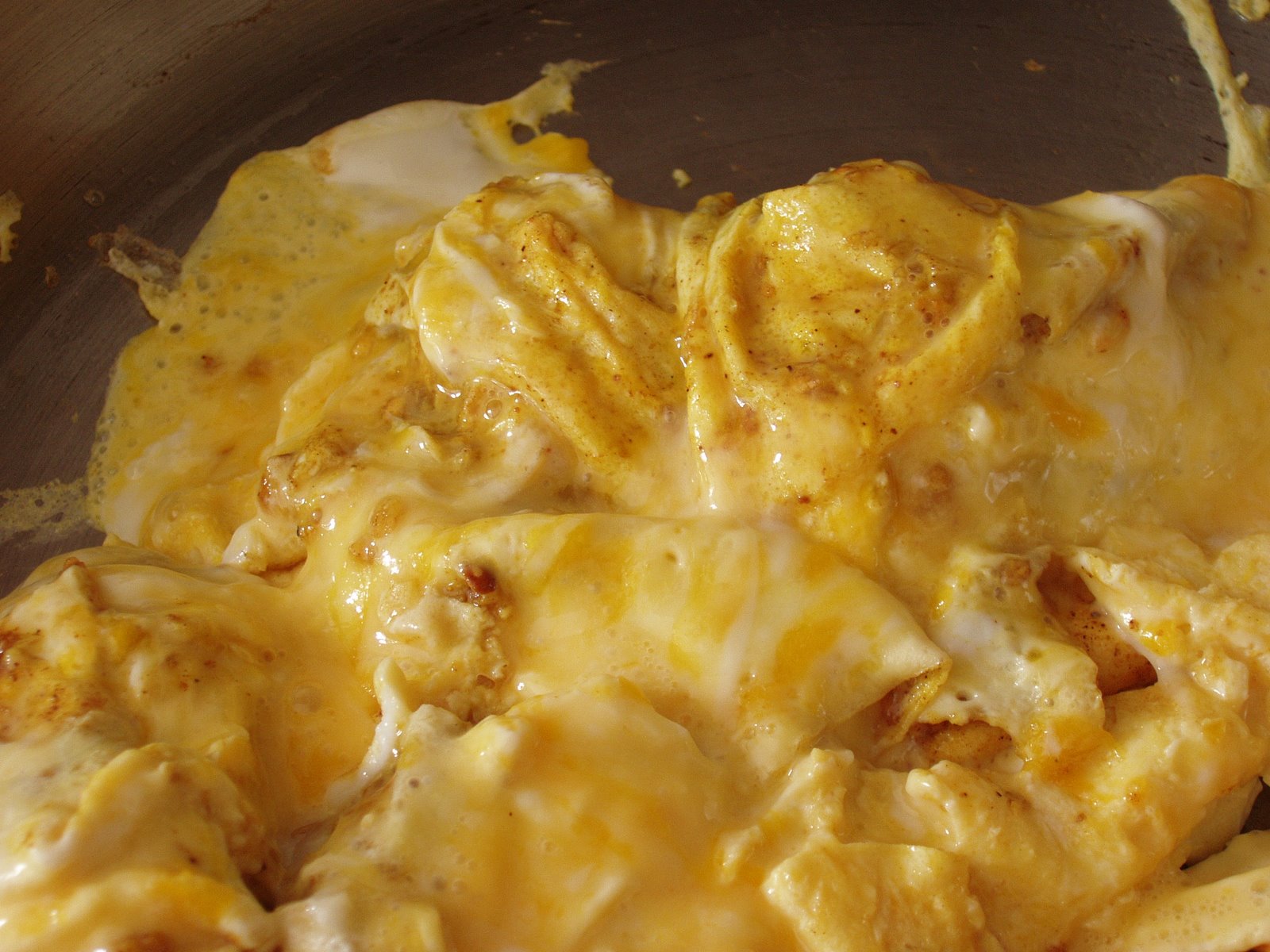
Fig and Almond Clafouti


Evening in Coburg. The back door is open. Someone is singing their prayers; their voice floats in on the night. A train hoots low as it approaches the crossing. The bells ring.

There is a sudden thump, and a shake, and a rustle. The fruit bats are visiting our fig tree. As they lumber through the branches, feasting as they go, they meet each other and voice their claims in outraged squeaks.

Each morning, we wake to a fresh crop of butchered figs littering the ground. Late afternoon, we put up the ladder and fetch our crop for the day, a dozen or so fruit newly ripened by the sun. Each evening, the bats come back and demolish what we could not reach, and so the cycle of life continues.

We have been eating fresh figs, baked figs, figs galore. And for dessert, fig and almond clafouti. The almond meal make this a very moist, very rich dish. If you want a drier, firmer dish, substitute coconut flour for half the almond meal; or, if you have no problem with gluten, white flour. However you make it, it is a truly figgy pudding – and absolutely delish!

Fig and Almond Clafouti

- 15 to 20 ripe black figs
- butter, to grease the dish
- 1 cup milk
- 3 large eggs
- 1 tsp good vanilla essence
- 1/4 cup brown or coconut sugar
- 1/2 cup almond meal
- a pinch of salt
- a handful of flaked almonds

Grease a 10” ceramic tart dish or skillet. Behead the figs, then halve or quarter them and lay them in the dish.

Mix the milk, eggs, vanilla essence, sugar, almond meal and salt together. You can use a blender or a whisk – either way, aim for frothy. Pour this mixture over the figs.

Sprinkle a generous handful of flaked almonds over the top. Slide the dish into the oven, and bake for 40 to 45 minutes. Remove from the oven, and leave to cool and set for at least ten minutes before slicing. Serve warm or cold.

Very good for breakfast!

(Backyard: figs, eggs. Victoria: almond meal, almonds, milk, butter, salt. Imported, but fair trade and organic: coconut sugar, vanilla essence.)

Friday, September 14, 2012

Plum Clafouti with Almond Meal


Ah, the British. We take what we want, we twist it out of all recognition, then we claim it as our own. As genocidal as this pattern has been for other cultures, on the plus side it has led to some great food. Kedgeree is one classic example; chicken tikka masala is quite probably another, although there is some debate over whether it was invented in Glasgow or Delhi.

The recipe which follows is a third. Made with cherries and white flour, we could call it 'clafoutis', or, more commonly in English, 'clafouti'. Made with other fruit and white flour, we'd properly call it a 'flaugnarde'. But gluten intolerant arrogant English bastardiser that I am, I make it with plums and almond meal – and I have no idea what I should call the resultant dish! Yet like a typically imperious colonialist, and because many of you are at least vaguely familiar with clafouti and will get a general idea of the nature of the dish from the use of the word, I will continue to refer to it as such. It certainly sounds better than 'soft eggy plum pudding thingy'.

Whatever it should be called, this dish is perfect for a sunny Sunday breakfast in the early spring when the chickens are back on the lay, and a few bottles of plums remain in the preserves cupboard. I've used much more fruit than is usually indicated because I wanted every bite to drip with plums; the batter does little more than bind the plums together.

Almond meal replaces regular flour, as almonds and plums are a delightful match. Between the extra fruit and the almond meal, the dish is much more moist than a regular clafouti, but the resulting heaviness is very satisfying: it will ward off any winter chills which still wreath through the morning air. If, however, you want a lighter clafouti, reduce the amount of fruit and replace some of the almond meal with coconut flour; click here for a more standard recipe.

Plum Clafouti with Almond Meal

- unsalted butter
- approximately 2 cups quartered bottled plums, or fresh plums quartered and lightly stewed (this is the equivalent of a Fowlers #20 Jar; for notes on bottling plums, click here
- 4 eggs
- 1¼ cups almond meal
- 1¼ cups milk (low fat is fine)
- 1 tbs sugar
- 1/2 tsp proper vanilla essence (none of that thin chemical stuff)
- a pinch of salt

Preheat the oven to 180°C. Grease a 24cm porcelain tart dish.

Drain the fruit well. Drink the juice if you like; it's rather yummy.

Place the other ingredients into a food processor or blender. Whizz until all is light and frothy. Pour the batter into the greased dish, then gently spoon the plums over the batter. Slip into the oven, and bake for 35 to 40 minutes or until it is golden. Serve warm or cold.

Adapted from a formula by Mollie Katzen in the now out of print Still Life with Menu.

(Local: plums, eggs, milk. Not local: butter, sugar, almond meal, vanilla essence, salt.)

Still Life with Menu Cookbook: Fifty New Meatless Menus with Original Art

Monday, August 27, 2012

Stinging Nettle and Borage Tart


One of our most memorable meals came about spontaneously. We were at the Vic Markets with a friend when we saw big bunches of borage. ‘I once saw a recipe for borage and stinging nettle ravioli,’ I said. 'Oh?' said my friend, 'There are lots of stinging nettles at the property...' - his country block about an hour's drive out of Melbourne. There was a moment’s pause, then we looked at each other and grinned.

It was time for a day trip. We bought the borage and some ricotta; we bought provisions for a picnic; and then we headed up to North Blackwood, sat ourselves atop our favourite ridge, and ate lunch. After a necessary snooze, we wandered down the hill with rubber gloves and shopping bags and picked stinging nettles.

 
Much, much later, we drove back to Melbourne. There, we whipped up our ravioli in a matter of hours, and sat down to a spectacular and quite possibly very drunken dinner some time close to midnight.

The things you do when you have no kids.

And yet last week, as I was walking between kinder and school, I found a patch of stinging nettles growing on a verge in a quiet street. The shoots were vibrantly green, bursting with health, and I remembered our long-ago dinner with a smile.

Despite having no gloves I grasped the nettle, so to speak. I always carry a bag for spontaneous gleaning, and so I carefully wrapped the young tips of the nettles in the fabric of the bag and pinched them off, clump by clump. One or two stings were enough to remind me I was alive; bag full, I headed off to school with the makings of dinner, a happy memory and a whistle.

Stinging Nettle and Borage Tart

For the pastry
- 120g plain flour (I used spelt; I’ve also used White Wings GF flour which has turned out good enough for ordinary mortals, if not for a French pastry chef.)
- 60g unsalted butter
- 3 tbs cold water
- pinch salt

For the filling
- 200g stinging nettle tops (before they have gone to seed)
- 200g borage leaves
- a handful of sweet marjoram, if it grows in your garden
- 150g cheddar cheese
- 6 eggs
- 1 ½ cups milk (low fat is fine)
- a sprinkling of pine nuts (optional, but good)
- 100g sea salt, pepper

Make the pastry: (This is exactly the same base as Onion Tart.) Place the flour, a pinch of salt and the butter in a food processor. Process for 30 seconds, or until the butter and flour are incorporated; there will be no loose flour flying around. Add the water a tablespoon at a time, and process for another 30 seconds to a minute or until the mixture resembles tiny soft pebbles.

Flour the bench and a rolling pin. Tip the pastry onto the bench, and gently form into a flat disc with your hands. Roll it out, rolling from the centre to the edge and turning 90 degrees between each roll, until it fits your dish. (Mine is 25cm in diameter.) Drape the pastry over the rolling pin and lift it carefully into the dish. Pat into place. Trim the edges. Place the dish into the freezer, and leave it there until you need it.

Preheat the oven to 180°C.

Use kitchen scissors to snip the nettle leaves from their stems. Cut the thick stems from the borage.

Boil a pot of water. Wash your greens well, and chop coarsely. Blanch the greens in several batches, cooking each batch for a minute then scooping it out to drain in a colander. Leave to cool.

Grate the cheese. Beat the eggs lightly, then whisk in the milk and marjoram. Season. Remove the tart shell from the freezer. Spread the grated cheese over the base. Spoon the greens over the cheese, then gently pour in the egg mixture. Strew pine nuts over the top, if you wish, then slip the tart into the oven for 45 minutes or until the top is puffy and there is just a very slight wobble in the centre.

Leave to cool for at least ten minutes, during which time it will set further. Serve with a crunchy sort of salad on the side.

I am indebted to Jamie Oliver for the particular combination of stinging nettles, borage leaves and marjoram, which features in a ravioli recipe in The Naked Chef.

(Backyard: borage, eggs, marjoram. Gleaned locally: stinging nettles. Locally sourced: milk. Not particularly local: flour, butter, cheese, pine nuts, salt, pepper.)


The Naked Chef

Wednesday, May 2, 2012

Apple Snow


Several years ago we visited Berlin in winter and it snowed every day. Snow covered cars and bicycles; snow heaped up in the streets. Cafés and bars left their outdoor furniture on the pavement, and snow was piled foot high on the tables and chairs. Snowploughs focussed on the main roads, so our suburban street packed down into ice and the cars drove through at a very cautious 10 kph. All was quiet and still; bliss.

We went to the playground and rode the flying fox into a snowdrift, laughing and screaming; we borrowed a sled and went scudding down the local hill. We watched a giant snow fight set to house music between two suburbs, and laughed at adults running to the fight clutching readymade snowballs in their arms. We sat for hours watching the snow fall outside the window of our apartment. To snow neophytes like us, we were in heaven.

 
It doesn’t snow in Melbourne except at our house. The new season’s apples are ripe, and we are making snow – apple snow, that is. Apple snow is a lovely light English classic, and a great way to use up egg whites. Even better, it takes about five minutes and your three year old can do most of it. Just supervise her with the mix master and she’ll be fine!

Apple Snow

- 400g smooth apple purée
- the whites of two large eggs
- 120g caster sugar (I often use raw caster sugar for the extra flavour, but it is at the expense of a pure white snow)
- pinch of cinnamon

Place the eggwhites into a mix master or a large stainless steel bowl*. Beat until they resemble soft peaks. Sprinkle in the cinnamon and then, very gradually, add the sugar tablespoon by tablespoon, until it has all been absorbed and the egg whites resemble stiff peaks.

Very gently fold in the apple purée, taking care not to knock out the air which you have just so painstakingly introduced into the egg whites.

Spoon the mixture into large glasses or bowls, and serve. You can refrigerate it for an hour or two, but no longer as the apple will begin to separate from the meringue.

Use the leftover egg yolks to make hollandaise sauce or mayonnaise.

*Note: Egg whites will not stiffen if there is any residual fat in the bowl. Plastic bowls are porous and always hold traces of fat, so do not use plastic. Aluminium bowls turn the whites grey, so do not use aluminium. Copper bowls are unbearably expensive, so do not use copper. Glass is a possibility, but the whites slip and slide down the sides. Ergo, stainless steel.

Adapted from the ever charming Apple Source Book, a cornucopia of information about English apples including recipes for food and cider, orchard advice, and a comprehensive list of apple varieties with notes on their provenance, history and usefulness.

(Backyard: eggs. Gleaned from Gembrook: apples. Nasty stuff: sugar. Question: is it better to buy organic sugar from Brazil, or conventional sugar from Queensland? I can’t decide, so I fluctuate. Organic: cinnamon.)


The Apple Source Book

Wednesday, April 11, 2012

Hot Cross Buns

When I was a child, we’d go to church first thing on Good Friday, and then the entire congregation would descend on Dawn’s house. Dawn had been up since the crack of, well, dawn, making hot cross buns for a hundred people. Endless steaming trays came out of the oven; then the buns were slathered in butter and passed around. I’d normally knock off six or seven – I have never met a hot cross bun the equal of Dawn’s and there were always more than enough.

Sometime during the Easter festival, my family also dyed eggs, drawing on them with wax crayons then dipping them in bright Greek egg dye. But very early one Easter morning, I had an idea. I’d read how you could dye eggs by boiling them in onion skins, and decorate them with the image of parsley by tying a sprig tightly against the egg with a stocking. My parents were still sleeping; my sister and I were bored; so we found some old stockings, picked parsley from the garden, then peeled all the onions in the pantry. We tied the parsley against the eggs, and set them to boil in a small saucepan with the brown onion skins.

Being children, we left the ends of the stockings dangling out and so, of course, they eventually touched the gas flame and caught alight. After flapping our hands around for a while, I thought to turn off the gas, and happily for everyone the flames soon went out.

When everything had cooled down, we fished the eggs out, and they were so pretty. But the ends of the stockings had melted to the saucepan and when my parents finally woke, we got into Deep Trouble. It is one of the times that I felt that I had done something terribly, terribly stupid.

Now I am an adult and developing traditions of my own. When it comes to eggs, I can’t be bothered fiddling around with stockings and onion skins. Well, I can be bothered but that memory of fire at six o’clock in the morning is enough to make me a bit anxious even now, and so I have gone back to using the Greek dyes when we meet with friends every Good Friday to dye eggs and make hot cross buns.

Meanwhile, I have engaged on a decade-long search for buns as good as the ones from my childhood. This year I tried Nigella Lawson’s recipe from Feast. The buns are scented with orange peel and cardamom, making kneading the dough a heady exercise as fragrant wisps of cardamom curl up with every push. They were delicious, not quite as good as Dawn’s perhaps – but then, I suspect a thirty year old memory will always taste better than reality. The recipe is available here.

Our kids breathlessly anticipate Easter. Between dyeing eggs, baking buns and staying up for Saturday night’s church service – which is followed by champagne and a midnight feast – there’s lots for them to think about. I hope that one day they will look back fondly on their Easter traditions and tell stories about them, too. Feast: Food that celebrates life

Tuesday, April 12, 2011

Mushroom & Chévre Tart


For the last week or so we've had a baby in the house, borrowed during working hours while one parent recovers from medical treatment and another is at work. It's been delightful to have her around and to be reminded what it was like with my own little ones: mornings of little toes and baby smiles; afternoons of bottles and naps – and evenings cooking dinner with baby in the sling.

For those of you in blissful ignorance, I'll let you in on a secret: most babies – and kids – get grizzly at the end of the day, about four o'clock to be precise. Those of us in the know call it the witching hour or, if things are really bad, arsenic hour.

There are alternatives to poisoning, however. You can leave the baby to scream in its cot; you can plop the kids in front of the telly. But really, children want physical affection and attention; and babies want to be held; and of course everyone wants this right about the time you start thinking about dinner. Screaming babies, fighting kids, tired mum and knives; it's enough to drive you to drink.

But on a good day, you plan ahead. Soon after lunch during quiet time, while everyone sleeps or reads, you make a pastry crust and slip it into the freezer to firm up; you fry up a heap of mushrooms.

Closer to dinner time, while baby snoozes in the sling, head nestled into your chest, and your other kids are quietly squabbling, all you need to do is extend your arms as far as you can reach and grate a pile of cheese, beat some eggs, and assemble a tart. Pop it in the oven, collapse into your favourite chair, and read a heap of stories to babies and toddlers alike. Fifty minutes later, dinner is served and you are officially a wonder woman! Congratulations!

If you're really lucky, you'll even have enough leftovers to reheat the next night, necessitating the construction of nothing but a salad – and the seven year old can do that.

Mushroom Tart

For the pastry:
- 120g flour
- 50g unsalted butter
- up to 3 tbs water
- pinch salt

For the filling:
- 350 to 400g white mushrooms
- 150g chévre
- 150 cheddar
- 6 eggs
- 2 cups milk
- a few stems of thyme (optional)
- a sprinkling of pine nuts
- salt, pepper

Make the pastry: (This is exactly the same base as Onion Tart.) Place the flour, a pinch of salt and the butter in a food processor. Process for 30 seconds, or until the butter and flour are incorporated; there will be no loose flour flying around. Add the water a tablespoon at a time, and process for another 30 seconds to a minute or until the mixture resembles tiny soft pebbles.

Flour the bench and a rolling pin. Tip the pastry onto the bench, and gently form into a flat disc with your hands. Roll it out, rolling from the centre to the edge and turning 90 degrees between each roll, until it fits your dish. (Mine is 25cm in diameter.) Drape the pastry over the rolling pin and lift it carefully into the dish. Pat into place. Trim the edges. Place the dish into the freezer, and leave it there until you need it.

Slice the mushrooms and strip the thyme, if you're using it. Warm a swirl of olive oil in a wide skillet, and add the mushrooms, thyme and a pinch of salt. Cook over a brisk heat until the mushrooms have softened and are starting to turn golden. Add a grind of pepper, then turn off the heat and leave to cool slightly. (You can pause here and do something else for a few hours.)

Preheat the oven to 180°C.

Grate the cheddar. Beat the eggs, and whisk in the milk.

Remove the tart shell from the freezer. Sprinkle the grated cheddar over the base. Spoon the mushrooms evenly over the cheese; then coarsely crumble the chévre and tumble the pieces over the mushrooms. Gently pour the egg and milk into the dish. Strew pine nuts over the top, then slip into the oven for 45 minutes or until the top is puffy and there is a very slight wobble in the centre.

Leave to cool for five to ten minutes, during which time it will set further, before serving.

(Local: mushrooms, thyme, chévre, eggs, milk. Not particularly local: flour, butter, cheese, pine nuts, salt, pepper.)

Saturday, March 26, 2011

Mayonnaise


My great grandmother was a caterer. My mother often spent weekends and holidays with her, helping in the kitchen at various events – including at Freemasons' dinners. At the Freemasons' hall they were confined to the kitchen. There my great grandmother would prepare dinner; but, lest she observe their goings-on, men would carry the meal into the hall, and later return with the dishes.

After dessert, any traffic between kitchen and hall would cease and the door be carefully locked. My great grandmother would wait a few minutes, then beckon to my mother; the two of them would creep over and take turns peeping through the keyhole to watch the men strutting about in their aprons. 'Look at those silly men, Ruth,' she'd whisper, and they'd giggle and peek, their own far more functional aprons stuffed into their mouths to silence the sound; when it became too much, they'd tiptoe back to the sink to chortle softly over the dirty dishes.

My great grandmother was, by all accounts, a magnificent woman, and not just in spirit. She had a mighty chest and bulging biceps. In the days before mix masters were common, she'd whip up wedding cakes and pavlovas and gallons of cream, and all by hand.

My chest may be mighty, but my biceps do not bulge; in fact, I may be developing fedoobedahs. So to counter this, and in homage to my great-grandmother, I have been whipping: cream, egg whites, hollandaise, and, of course, mayonnaise. They may not be the ideal foodstuffs to develop shapely arms and Buns of Steel™, but they are a great way to get protein into my fussy five year old. At least, that's my excuse.

This mayonnaise is nothing like the gluey white substance found in a jar. This is the real thing: a soft yellow glop, and absolutely delicious. Use it anywhere: blanketed over lightly boiled eggs, smeared on a sandwich, tossed through coleslaw, drizzled over asparagus, or mixed through a celeriac rémoulade.

Mayonnaise

- 2 egg yolks, at room temperature
- 1 tbs lemon juice plus more to taste
- 1 tbs seeded mustard (or not if you want a more gentle mayonnaise, or Dijon if you want your mayonnaise to be zingy but not seedy)
- 1 tbs chopped parsley or tarragon (optional)
- about 200ml olive oil
- salt to taste

Place a heavy bowl on a damp cloth on the bench; the cloth will stop the bowl from sliding around. Place the egg yolks, lemon juice, mustard and a pinch of salt into the bowl, and whisk. The bigger the balloon of the whisk, the easier this is.

Add the olive oil just a drop, and I do mean just a drop, at a time, whisking frantically all the while. This job is made infinitely easier if you have an oil nozzle on the bottle and hold the bottle up high above the bowl. When you have added enough oil so that it is beginning to look like mayonnaise (a couple of tablespoons), you can start adding the oil in a thin stream, still whisking continuously (I use my left hand to drizzle, and my right to whisk; you could also use an apprentice to drizzle as long as the apprentice understands that they must not slosh it in). When most of the oil has been added and you have a lovely soft glop, taste for lemon and salt and correct as needed.

If the oil is added too quickly, the mayonnaise can split. If it does, place another egg yolk into a clean bowl and whisk it. Gradually add the mayonnaise a little at a time, whisking frantically all the while, until it is combined and all is right with the world. Alternatively, you can whizz it in the food processor ('shock horror,' say the purists – it won't be as light, but it will certainly have amalgamated).

The photograph shows mayonnaise with seedy mustard and no herbs – perfect for celeriac rémoulade!

(Backyard: eggs, lemons. Local: olive oil. Not local: mustard, salt.)


Tuesday, March 15, 2011

Corn and Zucchini Custard


The ancients say that humiliation is good for the soul. With four chickens free ranging in our garden, humiliation is never more than a careless step away. Turn your head to chat with grandpa, and whoops! you're shooting along the path on a streak of chicken poo. In a more organised form of humiliation, which I try to think of as a spiritual discipline, every night I don thick gloves, grab a little shovel and a decommissioned saucepan, and spend ten minutes collecting the daily offering to add to the compost heap. Mosquitoes nipping at my ankles, hands reaching for the next little turd, I reflect on motherhood, housework, ego, humility... and fresh eggs.

Our hens are productive in more ways than one; and so, we eat a lot of eggs. What follows is a puffy eggy sort of thing, fortified with breadcrumbs. The zucchini provides a mild backdrop to the little explosions of flavour from the corn and the herbs. Served with a ready-made chutney or perhaps a thin tomato sauce, this is a lovely meal indeed.

The original recipe, by Deborah Madison, calls for cream. Too rich for my palate, I make it with milk instead. The custard still sets beautifully, and is a little lighter to eat. Leftovers are good the next day fried with a slice or two of ham.

Corn and Zucchini Custard

- 500g zucchini
- 1 medium onion, diced small
- 4 ears corn
- 2 tbs butter
- ½ cup parsley and/or basil, chopped
- ¼ cup vermouth or white wine
- 5 eggs
- ⅔ cup milk
- 120g grated cheese (a handful each of cheddar and parmesan is good)
- ⅔ cup fine breadcrumbs

Coarsely grate the zucchini. Toss with a little salt, and leave it to drain in a colander for half an hour. Squeeze out any excess moisture with your hands or press it in a tea towel. Remove the kernels from the cobs of corn by holding the ears upright on a board, and slicing downwards with a sharp heavy knife.

Melt the butter in a wide skillet, and add the onion. Sauté until soft. Add the corn, zucchini, and herbs, and cook for a minute or two. Add the vermouth or white wine, cover, and bring to a simmer. Cook for a few minutes, then remove the lid and cook until the liquid has been absorbed. Turn off the heat and leave for a few minutes to cool.

Beat the eggs and add the milk. Add the vegetables and the cheese, and mix well.

Heat the oven to 160°C. Butter a 1.5 litre mold (I use a round baking dish 21cm in diameter with slightly tapering sides). Sprinkle the mold generously with breadcrumbs, then toss any remaining breadcrumbs into the custard and mix well. Pour the custard into the mold, and bake for about an hour or until puffed and golden.

Remove the custard from the oven and allow it to rest for several minutes. Run a flexible knife around the edge, and flip onto a large plate. Serve in wedges, with a tomato sauce or a chutney on the side. Leftovers can be fried or grilled the next day.

Adapted from a recipe in The Greens Cookbook by Deborah Madison.

(Local: zucchini, corn, onion, parsley, basil, eggs. Not local: butter, vermouth, milk, cheese, breadcrumbs.)

Thursday, February 24, 2011

Blueberry Clafouti


This week some forty-odd years ago a child was born. He was one of those boys who played fair, and who looked out for the kids on the margins. A natural leader, he captained teams and ran youth groups; still in his teens, a baby boy was named after him.

While at uni, he lived with his grandparents. After his grandmother died, he spent an evening with his grandfather every week and talked about the racing results. Even now, at the helm of a law firm and with three kids of his own, he finds time for the lonely and marginalised. He balances commercial work with advocacy work, and stays in touch with all sorts of difficult people, seeing them not as problems, but as human.

At home, he loves to host and will find any excuse for bubbles. He remembers what people like to drink, and always has the right bottle in the house. A natural conservative, he's nevertheless open to madcap ideas and big adventures; every few years he drags his wife and young children across the world to catch up with old friends or to see something new.

He's the sort of man who gets up in the night with a crying baby; who changes nappies and packs the nappy bag; and who leaves his wife to sleep while he gives the kids breakfast. As much as he likes a girl in frilly knickers and high heels, he married a birkie wearing cotton tailed short haired feminist. Like my relatives, I'm not sure why. Perhaps it was my jokes, perhaps it was the cooking; whatever it was, it seems to work.

In gratitude to my gentle, thoughtful, generous, compassionate, kind and loving husband, I got up early on his birthday to make him breakfast. It had to be easy, because a morning person I am certainly not. I staggered into the kitchen, threw a few ingredients into a food processor and banged them in the oven; half an hour later, we celebrated with blueberry clafouti.

My husband's qualities are myriad; he was even born during blueberry season. Although clafouti is delicious with other berries, pitted cherries, quartered plums or other stone fruit, it is absolutely marvellous with blueberries. May he have many happy returns!

Blueberry Clafouti

- enough unsalted butter to grease the dish
- 2 punnets blueberries, or 1 cup berries or quartered stone fruit
- 4 eggs
- 1¼ cups plus 1 tsp plain flour
- 1¼ cups low fat milk
- 1 tbs sugar
- 1/2 tsp vanilla

Preheat the oven to 180°C. Grease a 24cm porcelain tart dish.

Place the fruit in a bowl, and gently toss it with 1 tsp flour.

Place the other ingredients into a food processor or blender. Whizz until all is light and frothy. Pour the batter into the greased dish, then scatter with the blueberries or other fruit.

Slip into the oven, and bake for 30 minutes or until it is puffed and golden. Serve immediately.

Tweaked from a recipe by Mollie Katzen in Still Life with Menu.

(Local: blueberries, eggs, milk. Not local: butter, sugar, flour, vanilla essence.)

Thursday, February 17, 2011

Goats Cheese Puff


Every now and then one needs something truly rich and celebratory for no particular reason at all. And sometimes one needs this midweek; that is, without planning or shopping or meticulous preparation.

The following recipe is fast becoming one of our more luxurious staples. Decadent souls that we are, we always have goats cheese and parmesan in the fridge; they sit there for weeks until needed. Our chickens provide us with an abundance of eggs, and thyme, of course, grows in the garden. With ingredients to hand, the dish takes ten minutes to prepare and another ten to cook. Thus while my little wild things watch a Maurice Sendak animation, I can assemble and cook a sublime golden puff, whip up a salad – perhaps zucchini –, set out good bread, pour out the wine and dinner, my friends, is served.

Last night Grandpa joined us. After finishing the last morsel, he sighed, then waggled his finger at my very little children. 'When you move out,' he said, 'life will be expensive. This sort of meal costs a fortune in a restaurant, so you'd better start saving!'. My children looked at him blankly; they know, you see, how easy it is – my seven year old makes this under supervision, and we are all very proud of her.

The photograph shows the puff partially deflated. If you're not photographing your food before dinner (and I rather hope you are not), insist everyone sits up at the table just before it is ready so you can whisk it out of the oven and present it, in all its golden glory, before it sinks.

The foodies among us will recognise it as a simple flourless soufflé, but since so many people are scared of soufflés we will call it puff.

Goats Cheese Puff

- unsalted butter
- 3 eggs, at room temperature
- 150g soft goats cheese (I use Meredith Dairy chévre)
- 60g grated parmesan
- 1 tbs milk
- 5 or so stems thyme, leaves picked and chopped to make a scant tablespoon

Preheat the oven to 200°C. Grease a large ovenproof soup bowl with the butter.

Separate the eggs, placing the whites into a large stainless steel bowl*, and the yolks into another largish bowl. Lightly break up the yolks with a fork, then mash the goats cheese into the yolks. Add the milk, the thyme and two thirds of the parmesan to the cheesy yolks, and mix well.

Whisk the egg whites until they form soft peaks, then fold them into the mixture. Scrape into the soup bowl, and sprinkle with the remaining parmesan. Slip into the oven for twelve or so minutes. It is cooked when the centre is goldenly puffed and the insides are creamy, not liquid. You can check by opening the puff with a metal spoon. If you can see liquid, slip it back into the oven for a few more minutes.

Serve immediately. Enough for three or four – it's very rich.

Adapted from a recipe in the delightful Kitchen Diaries by Nigel Slater.

*Plastic bowls are porous and always contain traces of fat; egg whites will not whisk if they come into contact with fat, so plastic bowls are no good. Aluminium bowls turn the whites grey, and copper bowls are wildly expensive. Thus, egg whites must be whisked in stainless steel bowls. Having said that, although whites will slide down the side of a glass bowl, if you don't have a stainless steel or copper bowl, glass will do.

(Local: eggs, goats cheese, thyme, milk. Not local: butter, parmesan.)

Monday, January 24, 2011

Tumbled Eggs with Zucchini Flowers


There is an old joke in New Hampshire that the only time anyone locks a car door is in summer, lest they return to find their back seat loaded up with squash. It's easy to plant too much – five zucchinis for a family are more than enough - and yet they are so easy to grow, and so delicious fresh, that it's hard not to.

We're well into zucchini season, and our plants are running riot. After the initial glorious burst, during which we ate zucchini salad every day for two weeks, it was time to turn my attention to the flowers. Golden zucchini flowers are velvety in texture and taste faintly of, you guessed it, zucchini.

I love the flowers. Stuffed with mozzarella and grilled, or lightly battered and fried, they are absolutely delicious, if a little fiddly to prepare; but in the middle of the week, when I'm looking for something easy to cook, I mix them with eggs. Eggs and zucchini flowers go beautifully together.

Pick male flowers, which are on little stems; or female flowers attached to visibly swollen zucchini. Leave the other female flowers, and at least one male flower to fertilise them, so that the zucchini glut continues. Later in the summer, when the pumpkins are really romping, use pumpkin flowers, instead.

If you don't grow your own zucchini, look for the flowers at the markets. Meanwhile, make a note in your diary to find a sunny corner or a large tub, and fill it with zucchini next summer.

Tumbled Eggs with Zucchini Flowers

- 8 to 10 zucchini (or pumpkin) flowers
- 6 or so basil leaves
- a good knob of butter
- 6 eggs
- a small handful of grated cheddar
- 2 tbs water
- salt, pepper

Slice off the hard base of the zucchini flowers and remove the sepals. Shake out any ants. Gently tear the petals from base to stem into strips about ½cm wide, or wherever the tear lines feel natural. Tear the basil into small pieces.

Crack the eggs into a bowl, and whisk with 2 tbs water. Add the grated cheese, and set aside.

Gently warm the butter in a wide skillet. When it has melted, add the flowers and the basil, and sauté for several minutes or until soft. Tip the contents of the pan into the eggs, and stir gently.

Raise the pan to medium heat, and add a little more butter if necessary. Tip the eggs into the pan, and draw the flowers around to distribute them evenly. Leave for a minute or so. Then, using a spatula, scrape the eggs from the edge to the middle of the pan, drawing them up into soft mounds. Do this several times, until the eggs are barely set. The eggs will continue to cook after you have removed them from the heat, so don't let them dry out.

Serve with salt and freshly ground pepper, tumbled over grilled bread.

Adapted from a recipe by Deborah Madison in The Savory Way.

(Local: zucchini flowers, basil, eggs. Not local: butter, salt, pepper.)

Monday, January 10, 2011

Tumbled Eggs, Gently Spiced


My husband is on holidays. During the day, he takes the kids out and about so I can write, bless him; in the evening, he sprawls on the couch with a good book. Meanwhile, I am juggling words, cooking, cleaning, washing, vacuuming, and everything else. He keeps telling me to sit down, relax, don't worry about it all; after about two days, I realised he was right.

So I've taken a holiday myself. I'm washing the fundamentals; cleaning the filthy; but that's about it. We're eating lots of bread and point for dinner: rice and beans, beans on toast, scrambled eggs, and good takeaway. I'm only using dishes that go in the dishwasher; and after putting the kids to bed at night he loads the machine while I, inspired by my Christmas present, go play in the garden.

It's a big shift. Before we had kids, we ate out two or three times a week. Holidays meant time to cook. I'd take the opportunity to make fancy meals, try new recipes and have people over. Now that I cook every day, and prepare and clean away breakfast, lunch and snacks besides, holidays have changed. I spend so much time being inventive throughout the year that holidays mean a sabbatical.

Having said that, I would like to comment on last night's eggs. Our lovely chickens are laying an egg a day and our carton is full to bursting. We eat eggs a hundred different ways, but for the first time yesterday I thought to spice them up.

I warmed some garlic in oil, then added a gentle spice mix (Mason's Moroccan Spice from Mason's Cafe, to be precise, made by my friend, the magnificent cook Viv Mason - but any good mix containing cumin, coriander, turmeric, nutmeg and cardamom should do). When the spices were cooked, I threw in the eggs and tossed them around, pushing and prodding until they were done.

The eggs came out silky soft, delicately flavoured, and lovely. Incidentally, I was recently gratified to learn that the way I make eggs is dignified by a name. I like my eggs rougher than an omelette, but smoother than scrambled; according to Tamasin Day-Lewis's fabulously informative Kitchen Bible, I can call them 'tumbled'. Sounds a lot classier than 'eggs', I must say.

Tumbled Eggs, Gently Spiced

- 2 cloves garlic
- 1 tsp Mason's Moroccan Spice Mix or similar
- 6 eggs, beaten
- 1 tbs flavourless vegetable oil
- salt, pepper

Crack the eggs into a bowl, and beat them lightly. Season with salt and freshly ground pepper, and set aside. (Day-Lewis says that adding salt to uncooked eggs can make them watery. I can't say that I've noticed.)

Whack the garlic with the flat of a knife. Flick away the skins, and chop it roughly. Gently warm the oil in a wide skillet, then add the garlic. Cook over low heat for a minute or two, until the garlic no longer smells raw but before it starts to colour. Add the spices and cook gently for half a minute more, or until they smell done.

Raise the heat to medium, and tip in the eggs. Using a spatula, scrape the eggs from the edge of the pan to the middle, drawing them up into soft mounds. Do this a few times, and run the spatula under the central eggs once or twice, until the eggs are barely set. This will take about a minute. They will continue to cook after you have removed them from the heat, so don't let them dry out.

Serve immediately with whatever takes your fancy: tumbled onto toast, tumbled over rice, or tumbled into baked potatoes with a bit of grated cheese.

(Local: eggs, garlic. Not local: spice mix, oil, salt, pepper.)

Monday, November 29, 2010

Nice Salad, Flowers Optional


In her marvellous book The Savory Way, Deborah Madison includes broad suggestions for 'Celebration Salad with Blossom Confetti'. As the mother of three girls, all of whom adore bright colours and flowers, I have used this idea countless times to make them eat. My experience is that a girl who turns up her nose at a perfect green salad, delicately dressed, cannot resist the same green salad when it's scattered with ribbons of flower confetti. The girl who screams every time she sees a potato will quietly eat if it's garnished with a few bright strips of nasturtiums.

If the nasturtiums aren't flowering, I might use whole borage flowers – the tiny blue stars taste ever so faintly of cucumber – or perhaps rocket flowers for a bit of zing. Violets are beautiful; red pineapple sage adds a slightly tropical fragrance; tiny marjoram, basil and thyme flowers each have their own flavour and are delightful to look at. You can eat most if not all herb flowers, as well as calendulas and rose petals. Cut larger petals into strips, so they do not catch on one's tongue; and use a sharp pair of scissors or a good knife to slice them cleanly. Eat smaller flowers whole.

As well as paying attention to petals, I look for interesting leaves. Soft green mignonette, freckled lettuces, red oak leaf: all make a pretty salad base, especially if they are complemented by tiny little rainbow chard or beet leaves. Use chard or beet leaves no longer than two inches in length, before they become tough.

On a hot night last week, we ate salad for dinner. I used to shop to make a classic salade niçoise; but one day it occurred to me to use whatever fresh ingredients I had in the garden. Now my salad changes month in month out. Later in the summer I will use the more traditional generous handful of green beans instead of cucumber, blanched for a minute or two; and yellow and red cherry tomatoes off our vines.

The quantity of tuna makes it filling enough for our family of five – three of whom are quite little – to consider it dinner, especially if it's accompanied by a thick piece of sourdough brushed with olive oil and char grilled. If your household is smaller, use less tuna and fewer eggs.

We call this Nice Salad, because some days it's salade niçoise and other days, it's just nice. Flowers are, of course, optional.

Nice Salad

- a fancy lettuce
- a handful of tiny beet leaves and/or rainbow chard leaves, if you have them
- 8 to 10 new potatoes (those tiny little golf balls, fewer if your potatoes are large)
- 2 to 6 eggs (depending how hungry everyone is and how many people there are)
- a cucumber, preferably a sweet Lebanese cucumber, but an English one will do
- 425g tin tuna (packed in oil because it tastes approximately a thousand times better)
- 2 or 3 tomatoes
- a dozen black olives and in this house this means Kalamata (optional)
- 5 or 6 nasturtium flowers, as bright and fresh as possible (optional)
- a lemon (or some wine vinegar or even tarragon vinegar if you have it)
- olive oil, salt, pepper

Bring a pot of water to the boil, and cook the potatoes until they are done. Add the eggs for the last six minutes. Drain, and halve the potatoes. Place the eggs in a bowl of cold water, then peel and quarter them.*

Separate, wash and spin the salad leaves. Arrange on a large platter. Tumble the potatoes over the lettuce.

If your cucumber is English, peel it, halve it, slice out the seeds, cut each half into three or four lengths and chop them into pieces. If your cucumber is Lebanese, halve it lengthwise, quarter it lengthwise, and chop it into pieces. Scatter over the lettuce.

Cut the tomatoes into sixths or so – you want manageable wedges – and add them to the salad. Flake the tuna out of the can and onto the salad. Arrange the eggs over the top.

Press on the olives with the base of a heavy glass and remove the pip. Tear each olive into four or so pieces, and tuck them in.

Drizzle the lot with olive oil and a generous squeeze of lemon juice or a splash of tarragon or other light vinegar. Season if you wish, although I find the tuna and olives are enough seasoning for me.

Shake your nasturtium flowers to dislodge any ants. Snip the petals from all but one of the flowers. Holding the petals over the salad, snip them into pretty ribbons which will float down onto the salad. Place the last flower artfully in the centre, and serve.

*If, like us, your eggs are from the backyard and too fresh to peel without losing great chunks, poach them instead and gently lay the poached eggs on top of the salad – and throw in another couple of eggs because people will eat more when they're so delicious. A nice problem to have!

The idea of eating flower blossoms came from The Savory Way, an indispensable book for anyone learning to cook good food. Madison has a deep appreciation for vegetables, herbs, oils, vinegars and other flavours, and uses them to create wonderful dishes which are intelligent and delicious. She writes thoughtfully about ingredients, and in careful detail about technique. This book was my training ground – I worked my way from cover to cover, and have drawn from it ever since.

The photograph shows a version of this salad as requested and assembled by my four year old: lettuce, tomatoes, potatoes, green beans, cucumber, tuna, and nasturtium and borage flowers.

(Local: salad leaves, potatoes, eggs, cucumber, tomatoes, nasturtium flowers, olive oil, lemon. Not local: tuna, olives.)

Friday, November 19, 2010

Tuna Hash and a Poached Egg

There are some things I just cannot do. Touch my toes, speak French, or make potato pancakes. When I make potato pancakes, they rarely form a nice cake at the bottom; or if they do, they collapse when I come to turn them. But in my defeat I've decided that I'm good at hash: chunky, messy, and crisply golden.

Another thing I'm not so good at is gardening. I like the idea; I keep giving it a shot. But then we get sick or busy, the weeds take over, and I lose hope. A few months ago I gave up on the potatoes, sure that they wouldn't amount to anything much. But this week, after I pulled out the broad beans – which this person of little faith planted on top of the tatie trench – I began digging out some intrusive couch grass. As I dug, to my surprise I discovered taties the size of my fist – sixty of them!

Unfortunately, because I didn't expect them, by the time they were discovered I had impaled a dozen of them on the gardening fork, further proof I'm a rotten gardener.

With a sack of stabbed potatoes, a carton of backyard eggs, and three hungry kids, I found myself dreaming of hash. In an American diner, they're usually cooked with beef or pork and topped with a fried egg. However, we don't cook red meat and I don't like fried eggs.

But in a funny little second hand cookbook, I found another idea. The book is the hilarious Take a Tin of Tuna (yes, it's slightly nauseating if you look at it too long), and includes a recipe for tuna hash. While it wasn't exactly what I was looking for, by the time I had fiddled with the proportions and changed a few ingredients, I ended up with something truly satisfying. The tuna met my need for something unctuous and meaty mixed in with the potatoes, and was even enough to get my four year old, who mostly hates taties, to eat a plateful.

Of course, if you're concerned about the overfishing of tuna and your four year old will eat another form of protein, you might make it not with tuna but with a few thick slices of bacon, chopped and fried with the onions. Or leave out the meat and stud it with salty feta or grilled haloumi just before serving.

Tuna Hash and a Poached Egg

- 1 kg potatoes
- several tablespoons olive oil
- 2 or 3 shallots, or 1 onion, sliced finely into half moons
- 3 spring onions, finely sliced including some green bits
- 1 cup peas
- 425g can tuna (or 2 thick rashers of bacon or a slab of haloumi or perhaps some feta...)
- 3 or so stalks flat-leaf parsley (optional), chopped
- 6 eggs, or however many your household needs

Peel the potatoes (or not) and cut into rough 1cm dice. Bring a pot of water to the boil. Blanch the peas for a minute, then scoop them out with a slotted spoon. Set aside. Add the potatoes to the boiling water, and boil for 5 to 7 minutes, or until barely cooked. Drain and set aside.

Warm several tablespoons of olive oil in a large heavy skillet. Add the shallots (or the onion), and cook over medium heat until tender. Add the spring onions, potatoes, peas and tuna and stir to combine. Cook for 5 to 10 minutes, pressing down with a spatula from time to time to encourage golden bits.

While it's cooking, boil the kettle, pour the water into another wide skillet and bring to a very gentle simmer, that is, water in which a tiny bubble rises once or twice a second.

Run the spatula around the potatoes, turning them over and roughing them up. Cook for another 5 to 10 minutes, or until you have lots of golden crispy bits or you're just too hungry to wait any longer.

Meanwhile, poach your eggs* in the other skillet. To do this, break an egg into a shallow coffee cup. Gently slide it into the barely simmering water, and repeat until you have a ring of eggs. Poach for four to six minutes, or until the white is set but the yolk is deliciously runny. The time will depend on the size of your eggs.

Place a good helping of hash on each plate, and top with poached eggs. Sprinkle with chopped parsley and pass the pepper.

*Note: This method of poaching works perfectly with very fresh backyard eggs; pretty well with fresh organic eggs; but it's somewhat messy with stale supermarket eggs. You could always soft boil them instead.

Inspired by a recipe in Joie Warner's Take a Tin of Tuna.

(Backyard: potatoes, eggs, parsley. Local: olive oil, shallots, spring onions, peas, and possibly bacon. Not very eco or local: tuna.)

Wednesday, October 27, 2010

Leek Tart

What fools those food writers think we be. Time and again I make a recipe and it is clear that there is twice as much sauce as should be, or stock, or sugar; time and again I look at a picture, and it is not what it claims to be. The latest offender is Maggie Beer. In her gorgeous if somewhat precious book, Maggie's Harvest, we have a full-page picture of a 'Pumpkin Picnic Loaf'. I asked my four year old to examine the photograph and tell me what was in the sandwich. 'Um, pumpkin,' she said. 'Feta or maybe chévre. Onions. Basil.'

Correct. My four year old can identify the ingredients in a photograph of a sandwich. And in the recipe, do we have feta or chévre? Onions? Basil?

No, we do not. Not a skerrick. The recipe calls for gruyere, not a white goats cheese; zucchini, not onions; and parsley. While the basil in the photograph could possibly be baby spinach leaves – also absent from the recipe – it could not by any stretch of the imagination be parsley.

Now, the recipe looks good. The sandwich looks better. But the disjunction between the two makes me mistrust the recipe and the writer, and I feel slightly miffed – how stupid do the editors think I am, that I can't identify the ingredients in a full-page photograph?

On the bright side, it gives me permission to make the sandwich the way I want – and when I make it, I will use chévre and onions.

As I think about not following recipes, I find myself recalling last night's leek tart and salivating. We had a dozen people for dinner, plus kids; so I made a green tart and a leek tart (doubling the pastry recipe to make two tart cases, of course), a cabbage and apple coleslaw, and a beet and pumpkin salad. Someone brought roast chickens, and that, plus 5 or 6 bottles of wine, formed the main course. Not too shabby for a Tuesday.

Every recipe I have seen for leek tart uses cream and, usually, egg yolks. As much as I love cream, I usually find it a bit rich in a savoury tart. So I made my tart with full cream milk and whole eggs, and it was simply delicious. The tart came out of the oven burnished gold, and the filling simply melted in the mouth. Perfect.

The recipe follows the Green Tart recipe almost exactly; even so, I will post it in full so you can follow it without referring to the Green Tart recipe.

Leek Tart

For the pastry:
- 120g flour
- 50g unsalted butter
- 3 tbs water
- pinch salt

For the filling:
- 1 large, 2 medium or 4 skinny leeks
- a skerrick of freshly grated nutmeg
- 200g cheddar cheese
- 5 eggs
- 1 ½ cups milk

Make the pastry: Place the flour, a pinch of salt and the butter in a food processor. Process for 30 seconds, or until the butter and flour are incorporated; there will be no loose flour flying around. Add the water a tablespoon at a time, and process for another 30 seconds to a minute or until the mixture resembles tiny soft pebbles.

Flour the bench and a rolling pin. Tip the pastry onto the bench, and gently form into a flat disc with your hands. Roll it out, rolling from the centre to the edge and turning 90 degrees between each roll, until it fits your dish. (Mine is 25cm in diameter.) Drape the pastry over the rolling pin and lift it carefully into the dish. Pat into place. Trim the edges. Place the dish into the freezer, and leave it there until you need it.

Preheat the oven to 180C.

Top and tail your leek(s). Slice down the middle, and fan out under running water to remove any trapped dirt. Shake and pat dry. Slice into half moons about ½ cm wide.

Melt 50g butter in a wide skillet. Add the leeks and a pinch of salt, and leave over medium-low heat to sweat for 30 or so minutes, or until the leeks are incredibly soft. Do not let them colour. Leave to cool slightly.

Grate the cheese. Beat the eggs lightly, then whisk in the milk with a skerrick of nutmeg.

Remove the tart shell from the freezer. Spread the grated cheese over the base. Spoon the leeks over the cheese, then gently pour the egg and milk over the leeks. Slip into the oven for 45 minutes or until the top is puffy and golden.

Leave to cool for at least ten minutes, during which time it will set further, before serving.

(Local: leeks, eggs, milk. Not particularly local: flour, butter, cheese, nutmeg, salt, pepper.)


Tuesday, October 26, 2010

Green Tart


Late in rainbow chard season, the leaves become extraordinarily wrinkly. I cut out the toughest part of the stem, wash the leaf, and find myself thinking always of old judges. The wet leaf hangs in my hand like a judge's wig, crimped and curled and ready to drape over head and shoulders. I think of red velvet robes and white ruffs; hooked noses and pinched faces with mouths like cats' bottoms, gavels held in gnarled and knobbly fists; or perhaps ruddy cheeks, a brandy-nose, and piggy eyes sunk deep in fat. I'm swimming in some Dickensian world of dark timber and ominous shadows; then the voice of one of my children breaks through, and I surface again to cook dinner.

It doesn't say much for my view of the judiciary. Perhaps I ought to accompany my husband – a lawyer – to court one day and see a young modern judge wearing slacks. But then where's the fun?

This week rainbow chard, beet leaves and warrigal greens made their way into a tart sort-of-thing. It's what I make when the egg carton's full and warrigal greens are surging over the garden path.

Green Tart
For the pastry:
- 120g flour
- 50g unsalted butter
- 3 tbs water
- pinch salt

For the filling:
- a bunch of greens. (This week I used about 500g greens, a combination of rainbow chard, beet leaves and warrigal greens*.)
- 6 anchovies (optional but good)
- a few strips of lemon zest, chopped very finely
- 200g cheddar cheese
- 6 eggs
- 2 cups milk
- a sprinkling of pine nuts (also optional, also good)

Make the pastry: (This is exactly the same base as Onion Tart.) Place the flour, a pinch of salt and the butter in a food processor. Process for 30 seconds, or until the butter and flour are incorporated; there will be no loose flour flying around. Add the water a tablespoon at a time, and process for another 30 seconds to a minute or until the mixture resembles tiny soft pebbles.

Flour the bench and a rolling pin. Tip the pastry onto the bench, and gently form into a flat disc with your hands. Roll it out, rolling from the centre to the edge and turning 90 degrees between each roll, until it fits your dish. (Mine is 25cm in diameter.) Drape the pastry over the rolling pin and lift it carefully into the dish. Pat into place. Trim the edges. Place the dish into the freezer, and leave it there until you need it.

Preheat the oven to 180C.

Boil a pot of water. Wash your greens well, and chop coarsely. Blanch the greens in several batches, cooking each batch for a minute then scooping out to drain in a colander.

Warm a swirl of olive oil in a wide skillet with the anchovies. Push them around until they are a sizzling paste, then add the greens and the lemon zest. Stir to combine, then leave to cool. If you are worried about someone getting a chunk of anchovy, briefly pulse-chop the mixture in a food processor until combined, but before it is sludge.

Grate the cheese. Beat the eggs lightly, then whisk in the milk.

Remove the tart shell from the freezer. Spread the grated cheese over the base. Spoon the green mixture over the cheese, then gently pour the egg and milk over the greens. Strew pine nuts over the top, then slip into the oven for 45 minutes or until the top is puffy and there is just a very slight wobble in the centre.

Leave to cool for at least ten minutes, during which time it will set further, before serving.

*If you are using warrigal greens, also known as New Zealand spinach or tetragon, it is absolutely imperative that you blanch them first. They contain high levels of oxalates, which can cause a tightening of the throat, nausea and worse when consumed in large quantities. Blanching removes the soluble oxalates and also some of the salts. Leave the lid off the saucepan while blanching so that condensation does not drop back into the saucepan, and discard the blanching liquid.

For more on warrigal greens, see Wild Lime: Cooking from the bushfood garden. This book is out of print, so hard to find; but the author has more recently written the glossier Wild Food: 100 Recipes Using Australian Ingredients, no doubt also worth a look.

(Local: greens, lemon, eggs, milk. Not particularly local: flour, butter, cheese, anchovies, pine nuts, salt, pepper.)

Wednesday, October 13, 2010

Hollandaise Sauce

Some couples come back from their tenth wedding anniversary pregnant. Us, we came home with an assignation. And a couple of weeks later, as arranged, my four-year-old and I headed up country and met with an eccentric man wearing a gaudy apron; we came home with four chickens.

Now these ladies are pecking and preening their way around our garden. They gobble up slugs with relish; they eye off the weed seeds and strip them clean; they endlessly turn over the compost heap; they peer in our windows and check what we're up to; they follow us around as we work in the garden. And they lay eggs.

We are totally smitten. My four-year-old spends hours each day carrying one chook or the other, or sitting on a little wooden chair in the run and chatting with them as they peck around her ankles. My six-year-old came home from school yesterday. 'I'm tired and cross,' she announced, then went and read with the chickens. She came in an hour later much refreshed. And I stand at the kitchen sink, looking out and laughing at the little heads peeking out from behind a flowerpot or popping up from a clump of grass.

All of us, young and old, crow with delight when we find an egg. It's like finding treasure two or three times a day. And I find myself wondering, what took me so long?

I can castigate myself for putting it off. Or, better, I can celebrate that we have an abundance of fresh eggs just as asparagus comes into season. Between asparagus, eggs, and a lemon from the neighbour's tree, we're most of the way to poached eggs and asparagus with hollandaise sauce.

I trim the asparagus and simmer it for a few minutes in a wide skillet until just cooked – not squishy, but not crisp either; meanwhile, I poach eggs in another skillet. And in a breathtaking feat of kitchen management, while the asparagus and eggs are cooking I whip up this hollandaise sauce ready to blanket the lot.

For more on how to poach an egg, click here.

Hollandaise Sauce

- 2 egg yolks (freeze the whites for meringue)
- 2 tbs cream or top milk (that is, the first bit of a bottle of unhomogenized unshaken milk)
- 1 tbs lemon juice, or to taste
- 4 tbs unsalted butter
- salt, pepper

Put the 4 tbs butter somewhere in easy reach.

Place the yolks, cream, lemon juice and salt into a deep pan. Whisk together. Heat over a medium flame. Holding the saucepan with one hand, whisk rapidly and continuously with the other. Make sure you whisk right to the edges of the pan.

The instant it thickens, take the saucepan off the stove – keep whisking – and walk to the butter. Throw it in, and whisk and stir until it is combined.

Serve.

Precautions: Do not stop whisking or you'll end up with scrambled egg yolks. If you are timid, you can make it over a double boiler (or a bowl resting over a saucepan of simmering water), but the double boiler method usually results in a thin undercooked sauce. Using direct heat is riskier, but as long as you remain observant it is easy and quick.

Adapted from a recipe in Robert Farrar Capon's The Supper of the Lamb, reviewed here.

(Local: eggs, cream, lemon, asparagus. Not local: butter, salt.)

Tuesday, August 17, 2010

Onion Tart

I need a good cry from time to time, and these last few months, as grief sits in my stomach like a lead weight, I've appreciated the catalyst of external factors. Last week, I had a bout of gastro. Disgusting as it was, the pre- and post-viral weepiness was very cathartic. I may have been absolutely pathetic, but I felt much better for getting those tears out.

On the weekend, friends came over for dinner. The next batch of tears was settling in my stomach; it's the middle of winter; and my pantry was full of onions. So I made an onion tart.

I sliced up six onions as thinly as possible, which got the tears rolling. During the evening, we talked about death and bodies and sorrow and loss, and the richness of the custard and the smoothness of the onions salted by my tears felt just right.

This is a rich and sumptuous dish, just the thing to share. The onions take a long time to cook, but I make them and the pastry case the night before, once the kids are in bed and all is peaceful. The next evening, it takes just a minute to put together. Then all I have to do is slip the tart into the oven, assemble a salad, accept a glass of wine, and chat as the house fills with the smell of good food.

Onion Tart
For a 22cm/9 inch tart

For the pastry:
- 120g flour
- 50g unsalted butter
- 3 tbs water
- pinch salt

For the filling:
- 50g unsalted butter
- 2 tbs olive oil
- pinch of thyme
- 6 medium onions, thinly sliced into half moons
- 2 eggs
- 300ml double cream

Place the flour, a pinch of salt and the butter in a food processor. Process for 30 seconds, or until the butter and flour are incorporated; there will be no loose flour flying around. Add the water a tablespoon at a time, and process for another 30 seconds to a minute or until the mixture resembles tiny soft pebbles.

Flour the bench and a rolling pin. Tip the pastry onto the bench, and gently form into a flat disc with your hands. Roll it out, always rolling from the centre to the edge, until it fits your dish. Drape the pastry over the rolling pin and lift it carefully into the dish. Pat into place. Trim the edges.* Place the dish into the freezer, and leave it there until you need it.

Warm the butter, olive oil and thyme in a wide heavy-based skillet. When the butter has melted, add the onions and a good sprinkling of salt (the salt prevents the onions from sticking). Stir well, then turn the heat right down and place the lid on. Leave for 30 minutes, then stir gently. Cook for another 15 to 20 minutes, or until the onions are completely soft but not coloured. Remove the lid, and cook for a few more minutes to evaporate any liquid, then take the pan off the heat and leave to cool.

Preheat the oven to 180C. If you are using a porcelain dish, place a baking sheet in the oven – this will give an the initial burst of heat which firms up the base.** Beat the eggs, then mix in the cream and the onions. Pour into the pastry case. Bake on the baking sheet for 40 minutes until just set – there should be a slight wobble in the centre. Remove from the oven and leave to cool for at least ten minutes. It will set further; and it tastes better tepid rather than hot.

*I use the trimmings to make mini jam tarts for my daughters – a good counterbalance to their usual diet of sourdough bread and chickpeas!

**I am assuming here the pastry is frozen. If not, you should bake it blind at 190C for 15 minutes, then empty out the beans, prick the base with a fork, and bake for another 5 minutes. Brush egg over the surface, and continue from the double asterisk.

Adapted from a recipe by Tamasin Day-Lewis in The Art of the Tart.

(Local: onions, thyme, olive oil, eggs, cream. Not local: flour, butter, salt.)

Friday, August 13, 2010

Pea and Potato Frittata

Another weeknight, and I'm sick of the usual. So I looked up Nigella and found something do-able: a pea and potato frittata. But her recipe doesn't have enough veggies for me, so I doubled this and halved that, added some herbs, and called it dinner.

Nigella's recipe calls for the onion to be diced before it's sautéed. I don't like little squares of onion in my eggs, but for some reason I don't mind shreds. In any case, I think onions taste sweeter when they're cut into half moons, so I sliced my onion instead.

I also added marjoram to give it a lovely velvety sweetness. If you don't grow marjoram, a little thyme would go nicely with the potatoes and onions; or you could always use that infinitely versatile herb, flat-leaf parsley.

I served a robust winter salad of beets and carrots on the side, and between the softness of the egg and potatoes, and the crunchiness of the salad, it all came out rather nicely!

Potato and Pea Frittata

- 1 onion, halved and thinly sliced into half moons
- 200g potatoes, peeled and diced small
- 150g frozen peas
- 8 eggs
- 1 tbs marjoram, chopped
- a generous handful of grated parmesan
- salt, pepper
- olive oil

Place the diced potatoes in a saucepan of cold water. Bring to the boil, and simmer for 5 or 6 minutes, then drain. Boil the kettle. Place the peas in a bowl, pour the boiling water over them, and leave them to soften.

Warm a good drizzle of olive oil in a wide skillet. Fry the onion until it softens, then add the potatoes and cook for 7 or 8 minutes. Don't brown the veggies, just let them cook through. Drain the peas and add them to the skillet. Cook for a few more minutes, then remove the vegetables to a bowl.

Turn on your griller.

Break the eggs into a bowl and whisk. Season, and add the marjoram and parmesan. Add the vegetables and stir to combine.

Reheat the skillet with another drizzle of oil, if necessary. When it is good and hot, pour in the egg mixture – it should immediately frill around the edges. Turn down the heat and cook at medium heat for 7 or 8 minutes, running a flexible spatula under it from time to time to prevent it from sticking. When it is mostly set, but the top is still runny, place it under the griller for a minute or two. It is done when the top puffs slightly.

Remove from the heat. Run a flexible spatula underneath it, hold a large plate against the pan, and flip! Sprinkle with extra herbs, and serve.

This tastes best tepid. My husband ate it with beetroot relish on the side.

Adapted from a recipe by Nigella Lawson in Forever Summer.

(Local: onions, potatoes, eggs, marjoram, olive oil. Not local: peas, salt, pepper, parmesan.)

Wednesday, July 28, 2010

Garlicky Scrambled Eggs

This is an adaptation of the eggs made by a friend from Beijing.

When she cooks it, she first fries up several chopped tomatoes, then places them in a bowl to the side. Just before serving, she stirs the tomatoes into the eggs. I leave the tomatoes out, partly because tomatoes aren't in season year round and partly because I'm lazy. But by all means put them in if you want to!

I also add a dash of mirin because the kids like the slightly sweet flavour, but of course that's not Chinese.

We eat these eggs with rice and any type of Chinese-style vegetable: broccoli with oyster sauce, stir-fried beans with ginger, or whatever.

Garlicky Scrambled Eggs

- 6 eggs
- 6 cloves garlic
- a dash of mirin
- unflavoured vegetable oil

Bash the garlic with the side of the knife, flick off the paper skin, and chop roughly. Warm a good slosh of oil in a skillet, then add the garlic and fry gently, stirring constantly, until the garlic smells done.

Lightly beat the eggs and the mirin, then pour into the skillet. Cook over low heat, pushing them about with a spatula, until they are scrambled and done. If you keep the heat low and stir constantly, they shouldn't stick or dry out.

Tip into a bowl and serve.

Thanks – and apologies – to Ying!

(Local: eggs, garlic, vegetable oil. Not local: mirin.)